F1 Engine and Power Unit Rules Explained: Components, Quotas and Penalty System
Racing Knowledge & Guides November 17, 2025
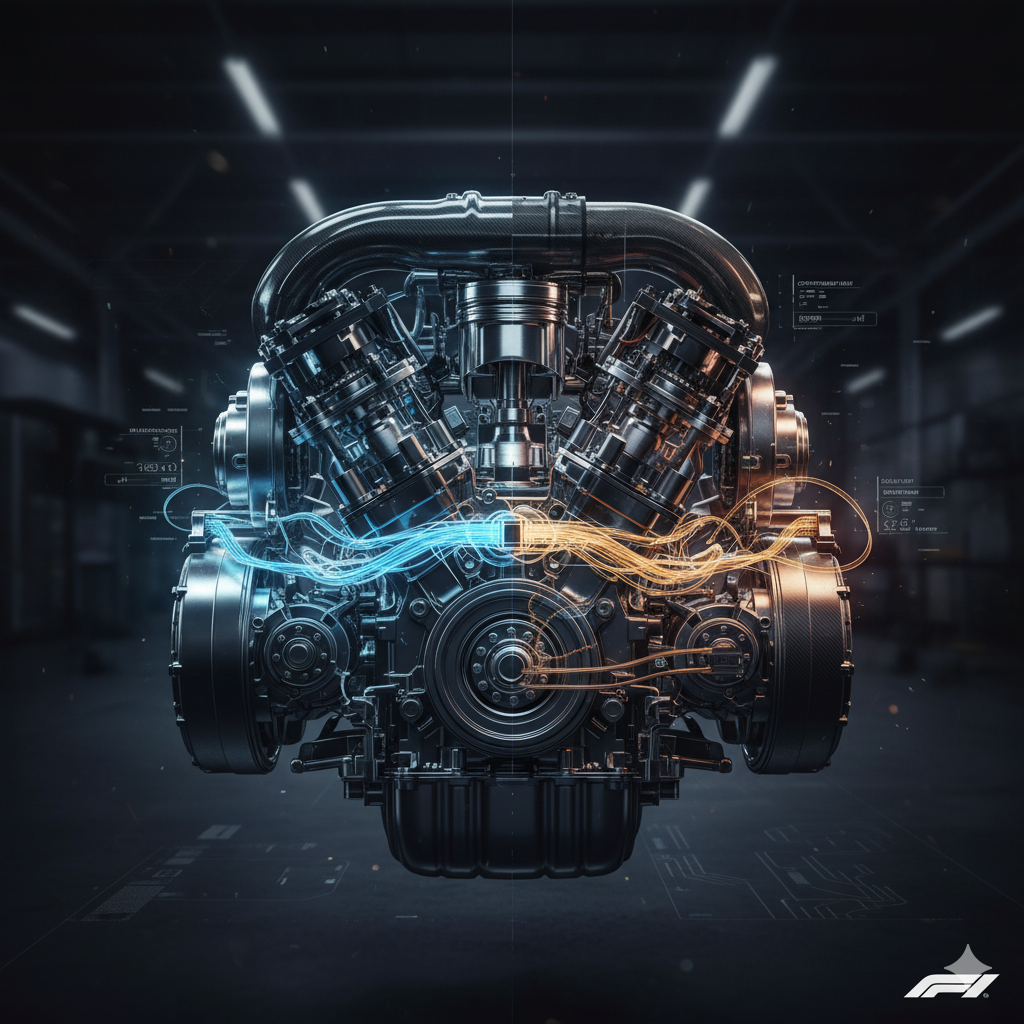
1. Structure of the Modern F1 Power Unit
A Formula 1 power unit (PU) is a highly efficient hybrid system combining internal combustion and electrification. Since 2014, PUs have consisted of six major elements:
-
ICE – Internal Combustion Engine:
A 1.6-liter V6 turbocharged engine, the primary source of power. -
TC – Turbocharger:
Compresses air entering the engine for increased efficiency and output. -
MGU-H – Motor Generator Unit – Heat:
Connected to the turbocharger, harvesting energy from exhaust gases or controlling turbo speed. (Scheduled for removal under 2026 rules.) -
MGU-K – Motor Generator Unit – Kinetic:
Recovers energy during braking and deploys electrical power to the rear wheels. -
ES – Energy Store:
The hybrid battery that stores harvested energy. -
CE – Control Electronics:
Manages energy flow and integration between all hybrid components.
Together, the PU delivers remarkable efficiency and performance, combining combustion technology with sophisticated energy recovery systems.
2. PU Component Quotas per Season
Each driver receives a limited allocation of each PU component to use across the season. Typical annual quotas include:
- ICE (engines): Limited number per season
- TC (turbochargers)
- MGU-H
- MGU-K
- ES (batteries)
- CE (control electronics)
Using more than the allocated number of any component triggers automatic grid penalties. These restrictions help control costs and ensure reliability is an essential part of car development.
3. Grid Penalties for Exceeding Quotas
When a driver uses more components than allowed:
- 10-place grid penalty for the first new component of a type beyond the allocation
- 5-place grid penalty for each additional component of that same type
- If multiple components exceed limits simultaneously, penalties are cumulative
- If penalties exceed available grid positions, the driver typically starts from the back of the grid
- In extreme cases, the FIA may instruct the driver to start from the pit lane, especially if the team makes setup or Parc Fermé changes
These penalties create strategic decisions around when to “take a new engine” during the season.
4. Reliability vs Performance Balance
Teams must balance:
- Performance: New engines deliver peak power.
- Reliability: Fewer failures mean fewer penalties and better championship consistency.
- Thermal efficiency: Engineers optimize combustion, cooling, and energy deployment without compromising lifespan.
Some teams choose to introduce stronger—but less durable—updates mid-season, accepting grid drops for better long-term competitiveness.
5. Fuel & Energy Deployment Rules
The FIA enforces strict limits on:
- Fuel composition: Must comply with standardized chemical specifications.
- Fuel mass flow rate: Prevents excessive power output at high engine speeds.
- Energy deployment:
- MGU-K can release only a regulated maximum of electrical power per lap.
- Energy harvested into the ES is capped.
- Total allowable MGU-K output and harvesting are closely monitored.
Hybrid deployment affects acceleration, top speed, and defensive/offensive race strategy.
6. Telemetry & Hybrid Regeneration
Every PU constantly streams live telemetry to the teams and the FIA:
- Engineers monitor battery state, turbo speed, engine temperature, fuel targets, and deployment maps.
- Regen (energy harvesting) happens during braking via the MGU-K and from exhaust gases via the MGU-H.
- Drivers manage power modes such as:
- Harvest mode
- Attack mode
- Balanced mode
Energy management has become one of the most sophisticated elements of modern F1 racing.
7. 2026 Regulation Direction
The 2026 rules represent a major technological shift, including:
- Removal of the MGU-H
- Significantly increased reliance on the MGU-K, producing much more electrical power
- More sustainable, fully synthetic fuels
- Lower drag, lighter cars, and revised aero rules
- Greater cost-control, simplified PU architecture
- Improved competition for new manufacturers entering the sport
These changes aim to emphasize sustainability, reduce complexity, and bring more engine suppliers into F1.
8. Summary
Modern Formula 1 power units are highly advanced hybrid systems balancing performance, energy recovery, and reliability.
- Strict component allocations and penalties shape season-long strategic decisions.
- Fuel flow, deployment rules, and telemetry management directly impact racing.
- Upcoming 2026 regulations will shift the balance toward electrification and sustainability.
Understanding PU rules explains why engine strategy can define championships — and why F1’s hybrid era remains one of the most technologically demanding in motorsport.